Understanding what you are buying
What shell form means in Malta
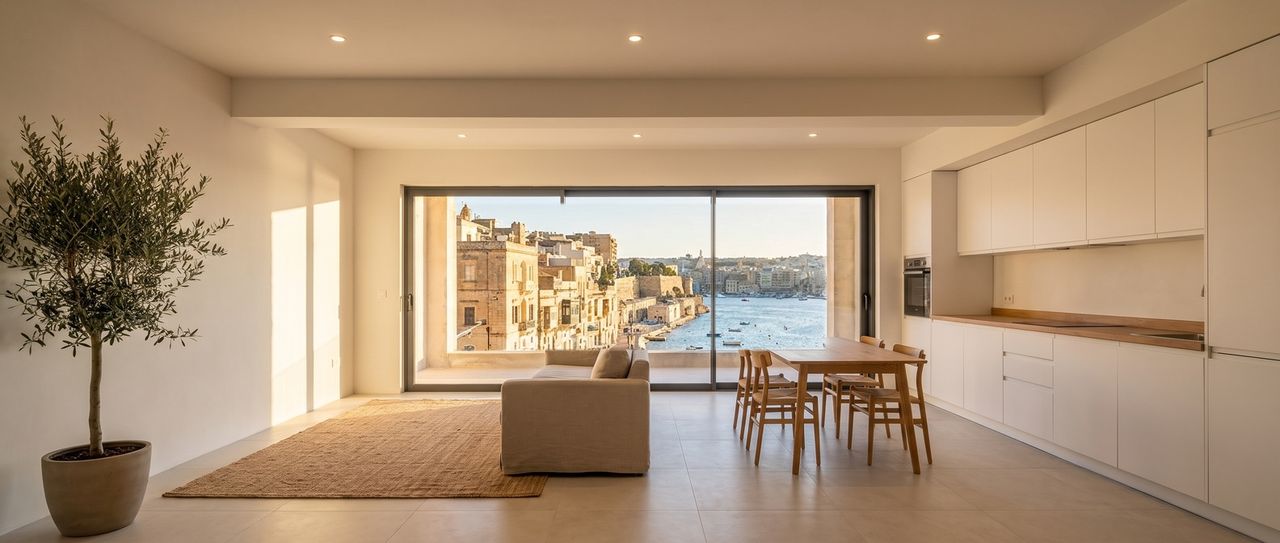
In Malta a large share of new apartments, maisonettes and penthouses are sold before they are finished inside. The words used in adverts, "shell form", "semi-finished", "finished", sound precise. They are not. None of them is defined in law, and two developers can use the same phrase for different things. This guide explains what each term usually means, and how to pin down what you are actually buying.
Shell form
A unit in shell form is structurally complete and weathertight at the openings at best. Inside you usually find:
- concrete or hollow-block walls with no plaster or gypsum
- a rough concrete slab with no screed and no tiles
- window and balcony openings with no frames or glazing
- services brought to the unit, but not run inside it: no wiring, no pipework to the rooms
- no kitchen, no bathrooms, no internal doors
What the developer normally still finishes is the building around you: the structure, the roof, the façade, and the common parts such as the entrance, stairwell and lift. That is a usual pattern, not a rule. Check your contract.
Semi-finished
Semi-finished means "more than a shell", and that is all it reliably means. Depending on the developer it can include any of plaster or gypsum, screed, apertures (windows and balcony doors), the front door, first-fix electrics and plumbing, and sometimes floor tiles. It frequently excludes the kitchen, bathroom fittings, internal doors and painting.
Because the range is so wide, two semi-finished units at the same price can be thousands of euro apart in what remains to be spent.
Finished
A finished unit is ready to live in, except perhaps for furniture and appliances. Even here, ask what is in the price: kitchen appliances, air-conditioning units, light fittings and wardrobes are sometimes extras.
The specification is what you are buying
The legal promise of sale (the konvenju) is what binds the developer, not the brochure. Before you sign, ask for a written specification attached to the promise of sale that covers, room by room:
- walls: plaster or gypsum, and to what finish
- floors: screed, tiles, skirting, and who chooses the tiles
- apertures: material, glazing and which openings are included
- electrics and plumbing: first fix only, or second fix too, and how many points
- kitchen and bathrooms: included or not, and to what allowance
- common parts: what is finished, to what standard, and by when
- the date by which the developer must complete its share of the work
If a line is vague, ask for it to be made specific in writing. Your notary and your own perit can tell you which gaps matter. Our guide to buying off-plan in Malta covers the promise of sale itself.
What a shell leaves for you to do
In rough order, finishing a shell means: first-fix services, plaster or gypsum, screed, apertures, tiling, second-fix electrics and plumbing, kitchen and bathrooms, internal doors and painting. Finishing a shell: steps and cost goes through each step with a budget range by standard.
Questions to ask the developer
- Which of the items above are in the price, and which are extras?
- Are the drainage stacks and stub-outs already fixed? (They decide where the kitchen and bathrooms can go.)
- Who is responsible for the façade, the roof and any shared terrace?
- When will the common parts be finished, and is that date in the contract?
- Can I start finishing works before the final deed, and on what terms?
Questions people ask
What does shell form mean in Malta?
Shell form means the structure is built but the inside is bare: concrete or block walls, a rough slab floor and openings without frames. Plaster, screed, services, apertures, kitchen and bathrooms are normally left for the buyer. The exact line varies by developer, so the contract specification is what counts.
What is the difference between shell form and semi-finished?
Semi-finished usually goes further than shell form. Developers commonly add some of the following: plaster, screed, apertures, first-fix electrics and plumbing, sometimes floor tiles. Bathrooms, kitchen, internal doors and painting are often still excluded. There is no legal definition of either term, so read the specification line by line.
Are the common parts included when I buy in shell form?
Usually the developer finishes the common parts, such as the entrance, stairwell, lift and façade, even when the units are sold in shell form. Make sure the promise of sale says so, with a description of the finish and a completion date.
Is buying in shell form cheaper?
The purchase price is lower because less work has been done, but you then pay for the finishing yourself. Whether it works out cheaper overall depends on the standard you finish to. The finishing budget calculator on this site gives a range by standard.
General information, not legal, tax or financial advice. Ask your notary, advocate or perit about your own purchase. Provenance: drafted with an AI model (Claude, Anthropic) from the sources listed, and edited for this site.