Buying off-plan
Home Loan for a Shell Form Property in Malta: How It Works
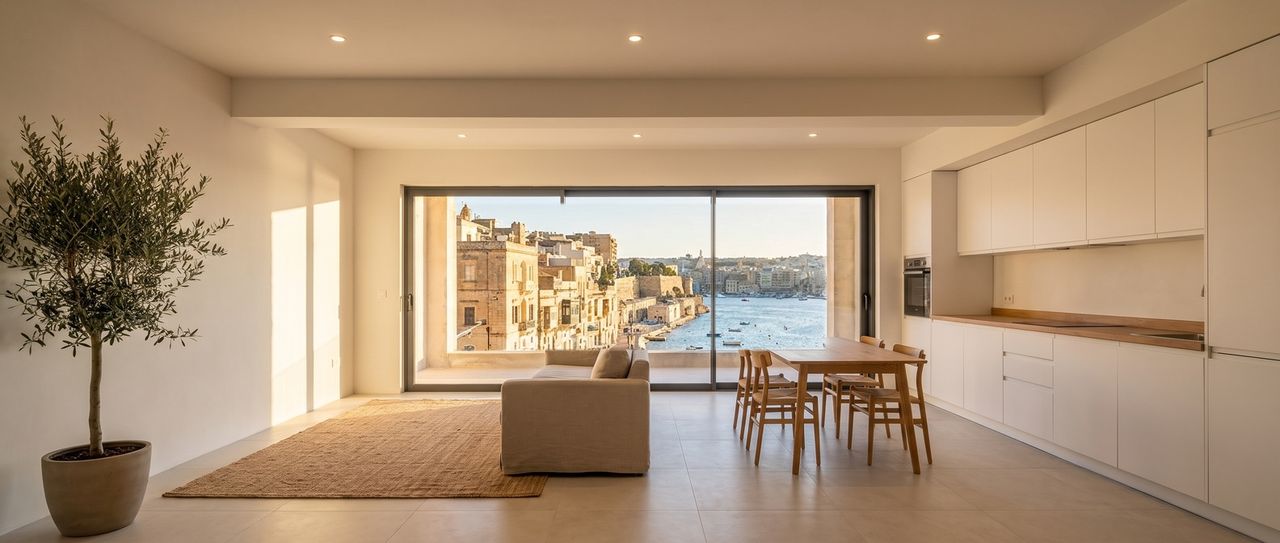
Buying a shell form or off-plan home with a loan works a little differently from buying a finished flat. The bank still has to value the property and stay inside the Central Bank of Malta's limits. But you also need money to finish it, and that money usually has to fit inside the same limits. This guide explains how that usually works, what the published bank documents say, and what they leave open.
We are not a bank, notary or lawyer. Treat this as background and confirm the details with your bank and notary.
What a home loan can be used for
Bank of Valletta's home loan guide says a home loan can be used to purchase, build, finish, rebuild, alter or improve a home 3. HSBC's Classic Home Loan sheet lists purchase, construction, completion, alteration or refurbishment of your own residence. It is for residents of Malta only, which matters if you are buying from abroad 4.
So finishing can sit inside the main home loan at these two banks. We found no published policy from APS, Lombard or MeDirect on shell or off-plan lending. The APS home loan page returned empty and the MeDirect representative example we found is dated May 2023. How those banks treat shell purchases is not settled by any source we have, so ask your bank.
How the money is paid out
At BOV, the bank draws down the loan on the day of the deed and pays the seller. Where the loan also finances completion works, those funds are drawn against invoices after the deed 3. In practice you, your contractors and your perit produce invoices, and the bank releases money against them.
HSBC adds a legal step. Where funds are used for construction or completion, the bank's special privilege over the amount used must be registered in the Public Registry 4. BOV says hypothecs are registered by the notary within 15 days of the deed 3.
We found no source on a separate "finishing loan" product. BOV and HSBC show finishing inside the same facility, but whether a separate loan is available is something to ask your bank.
The valuation and why it matters
BOV lets you choose the architect who values the property, though the bank may also require its own appointed architect, with a fee per its tariff. Its document list includes an architect's estimate of costs where applicable, plus building permits and plans. The architect's fees cover both the valuation and the estimate of finishing costs 3.
HSBC requires a bank-appointed architect using HSBC's form. The fee is €250 for a property valued between €150,001 and €400,000 4. If the valuation is more than 12 months old at the deed, it must be reconfirmed. An adverse revaluation lets HSBC withdraw the sanction letter, and HSBC warns this can affect your right to recover your konvenju deposit 4. With an off-plan build of 12 to 36 months 7, that 12-month point can easily pass.
KPMG states that banks typically lend on the final appraised, finished value 2. No bank document we found states how the valuation splits "as-is" shell value from finished value, or sets a maximum loan-to-value on the as-is value. Ask your bank how its valuer handles this.
The Central Bank limits
Directive No. 16 sets borrower-based limits that all banks apply. It came into force in July 2019 and an amended version took effect on 26 March 2026 1.
- Loan-to-value. For your own primary residence (Category I, which includes first-time buyers), the cap is 90%. For other property (Category II), it is 75%. Banks may lend above these caps on a limited share of their lending: 10% of loan volume for Category I and 20% for Category II 1. There is no separate tier for first-time buyers.
- Debt-service cap. Your repayments, worked out with a rate 1.5 percentage points higher than the actual rate, must not exceed 40% of income 1. KPMG puts the 2025 average house-purchase rate at 2.56%, giving a stressed rate of 4.06% 2.
- Maximum term. Up to 40 years for Category I and 25 years for Category II, but not beyond retirement age. That is 65 for those born after 1961 and 61 to 64 for earlier cohorts. Exceptions are possible under paragraph 19 1.
KPMG notes that Category II effectively needs 25% of your own funds 2.
How the finishing budget has to fit
Because banks typically lend on the finished value, KPMG says a buyer of an unfinished property must fund finishing out of the same loan eligibility, or put in more than the standard 10% minimum deposit 2.
Worked example. KPMG uses a buyer whose loan eligibility is €270,000 2. Suppose your perit's finishing estimate is F. If the finishing is financed inside the loan, the amount left for the shell itself is €270,000 minus F. If you want the full €270,000 for the shell price, you need to fund F from your own savings on top of your deposit. Ancillary costs such as notary, architect, insurance and taxes are not in KPMG's loan figures 2, so budget for them separately. Frank Salt lists a notary at around 1%, utility connection deposits, insurance and management fees, and says life cover is required for a loan 6.
The state's 10% Deposit Payment Scheme follows similar logic. A shell form property qualifies if it can be made habitable within the total price cap, which the November 2025 catalogue gave as €225,000 5. That cap has since been raised, so confirm the current figure with the Housing Authority. The scheme is for ages 21 to 39 buying a first residential property, and bank criteria still apply 5.
Off-plan: extra risks
Frank Salt says many banks will not finance off-plan purchases. It also says a loan offer can expire before completion, forcing a new application 6. Malta Sotheby's says that where the loan is tied to the valuation at completion, the amount can move with market value and leave a funding gap 7.
We found no Malta source explaining how banks finance stage payments to a developer before the deed. Frank Salt recommends staged payments tied to milestones rather than paying the full price up front 6, but how a bank funds those stages is not settled. See our guide to buying off-plan in Malta.
What to ask the bank before you sign the konvenju
The konvenju normally needs a deposit of around 10% plus 1% provisional stamp duty, and BOV recommends a "subject to bank loan" clause 3. Read our promise of sale guide and ask your bank:
- Will you lend on this shell or off-plan property, and on what value: as-is or finished?
- Can finishing be included in the same loan, and is it released against invoices after the deed?
- Who must do the valuation and finishing estimate, and does it have to be the same architect?
- What happens if the valuation becomes older than 12 months before the deed?
- How long is the loan offer valid, and what is the commitment fee? BOV gives a typical grace period of 6 months for purchase loans and 24 months for construction or completion loans 3. HSBC charges 0.10% per quarter, minimum €15 and maximum €40, on undrawn balances after the last drawdown date 4.
- Which Category applies to me, and what term can I get given my age?
Next steps
Get a realistic finishing figure before you speak to the bank, because it decides how much of your eligibility is left for the shell. Our guide to finishing a shell explains the main costs. Use the finishing budget calculator and the cost-to-own calculator at /calculators/ to build your numbers. Then Get finishing quotes so the estimate you give your bank and perit reflects real prices.
Questions people ask
Can a Maltese home loan cover the cost of finishing a shell?
Bank of Valletta says its home loans can be used to purchase, build, finish, rebuild, alter or improve a home. HSBC lists completion of your own residence as a purpose. At BOV, the money for completion works is drawn against invoices after the deed. Other banks' policies were not found in published form, so ask your bank.
How much deposit do I need for a shell form home?
For your own home, the Central Bank caps loan-to-value at 90%, so the usual minimum is a 10% deposit. KPMG notes that banks typically lend on the final finished value, so you either fund finishing from the same loan eligibility or put in more than the 10% minimum. For other property the cap is 75%.
Can I use the 10% Deposit Payment Scheme on a shell form property?
Yes, the Housing Authority's catalogue says the property can be in shell form provided it can be made habitable within the total price cap. The catalogue gave €225,000; the cap has since been raised, so confirm the current figure with the Housing Authority. Bank criteria still apply.
Will banks lend on an off-plan property before it is built?
Frank Salt says many banks will not finance off-plan purchases, and Malta Sotheby's says some banks hesitate to lend before construction is finished. No Malta source we found sets out how banks finance stage payments to a developer before the deed. Ask your bank directly.
Sources
- Central Bank of Malta, Borrower-Based Measures (Directive No. 16). · checked 26 Oct 2026
- KPMG Malta / Malta Developers Association, Construction Industry and Property Market Report 2025 (KPMG for the MDA), Housing Affordability chapter, pp. 89-92. · checked 26 Oct 2026
- Bank of Valletta p.l.c., BOV Home Loans - General Information Guide (ref PRO 057 MAR 25). · checked 26 Oct 2026
- HSBC Bank Malta p.l.c., Classic Home Loan - General Information Sheet (job ref 04/24). · checked 26 Oct 2026
- Housing Authority (Malta), Schemes Catalogue (digital, Nov 2025). · checked 26 Oct 2026
- Frank Salt Real Estate, A guide to buying property off plan. · checked 26 Oct 2026
- Malta Sotheby's International Realty, Buying Off-Plan vs Finished Property in Malta - Risk, Pricing, and Upside (23 Apr 2026). · checked 26 Oct 2026
General information, not legal, tax or financial advice. Ask your notary, advocate or perit about your own purchase. Provenance: drafted with an AI model (Claude, Anthropic) from the sources listed, and edited for this site.